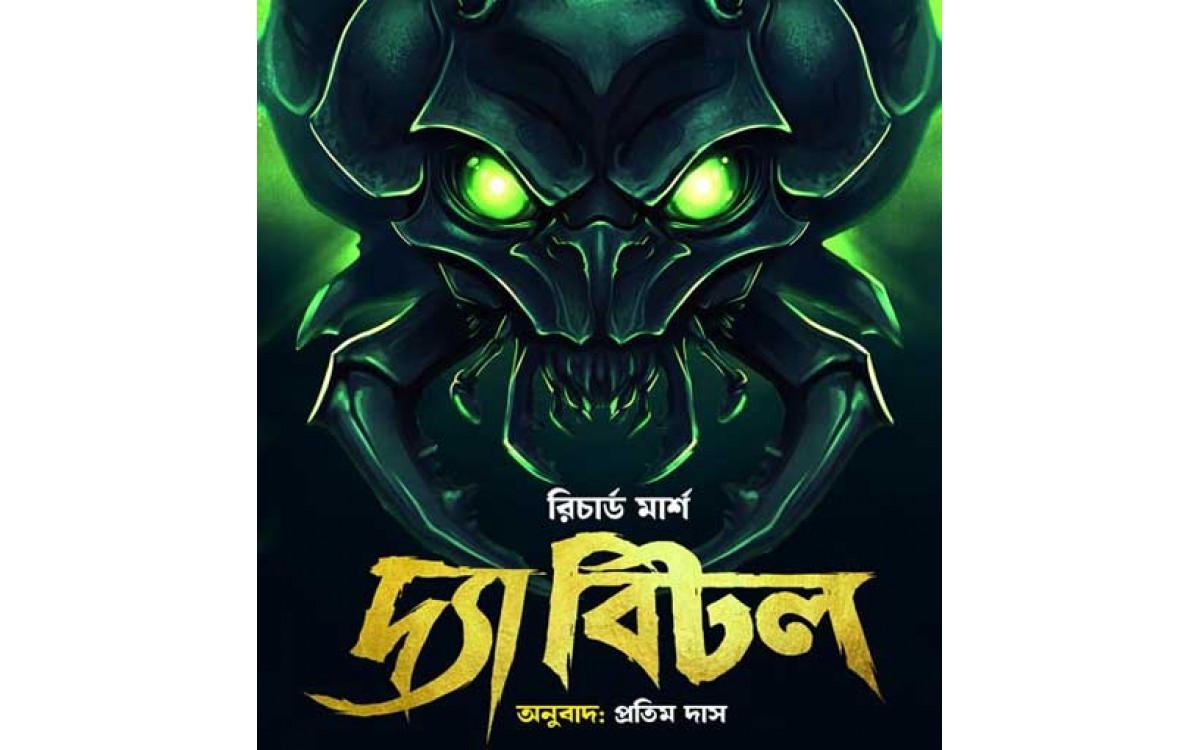
In the golden age of Gothic literature, while Bram Stoker’s Dracula (1897) stalked the shadows of Transylvania, another creature was haunting London’s foggy streets, one that rivaled—and for a time, even outsold—the famous vampire. That creature was the shape-shifting, hypnotic menace at the heart of Richard Marsh’s 1897 novel, The Beetle. For over a century, this cornerstone of British horror remained elusive to Bengali readers, confined to its original English. That is, until now.
Thanks to the dedicated work of translator Pratim Das and the publishing initiative of Readers Express, The Beetle has finally scuttled into the Bengali literary world. This is not just a translation; it’s a reawakening of a forgotten classic, inviting a new audience to experience its unique brand of fin-de-siècle terror.
Why "The Beetle" Matters: More Than Just a Monster Story
To understand the significance of this translation, one must appreciate the novel’s original context. The Beetle taps into the deep-seated anxieties of late-Victorian England: fears of reverse colonialism, the "Oriental occult," and the crumbling of British imperial confidence. The plot follows four narrators who become entangled with a mysterious, ancient Egyptian entity that can shift between a scarab beetle and a sinister, androgynous figure. This creature uses mesmeric power and psychological torture to pursue its vengeance, making it a villain far more psychologically unsettling than a mere monster.
The novel’s themes of invasion, identity, and the terror of the unknown from the East resonated powerfully with its original audience. In bringing it to Bengali, Pratim Das performs a fascinating act of cultural recontextualization. The "Oriental" fear that drove the Victorian reader is now presented to a Bengali audience, allowing for a rich, complex, and perhaps even ironic reading of the text’s colonial subtext.
The Translator's Craft: Pratim Das's Challenge
Translating Gothic horror is a delicate art. It’s not just about finding dictionary equivalents for words; it’s about transposing an atmosphere—the creeping dread, the unsettling pauses, the visceral shock. Pratim Das faces the formidable task of rendering Marsh’s dense, multi-voiced prose and the creature’s eerie, poetic menace into fluid Bengali.